She lived in the coastal town of Zarephath between Tyre and Sidon, a widow with her child, and her provisions were low. The drought and famine that consumed the land was an act of the Lord for the continued disobedience of His people who continued serving the pagan gods of the surrounding nations. And King Ahab had refused to repent for worshipping the Baals, for he did what was evil in the sight of the Lord. So, Elijah the prophet of God, had spoken what God told him: there will be no rain nor dew on the land.
Elijah then went at the Lord’s direction, to a riverbed valley in the desert near the Jordan River. Here was a source for water to drink and God sent him bread and meat by ravens morning and evening for a time. After a while, the water source dried up, too. So God again spoke to the prophet to travel to the town of Zarephath. Here Elijah would meet a widow that God would direct to help him. What would unfold here in the dusty, parched town of Zarepheth would be nothing short of God’s miraculous provision, astonishing mercy, and an incredible extreme faith in what God can and will do.
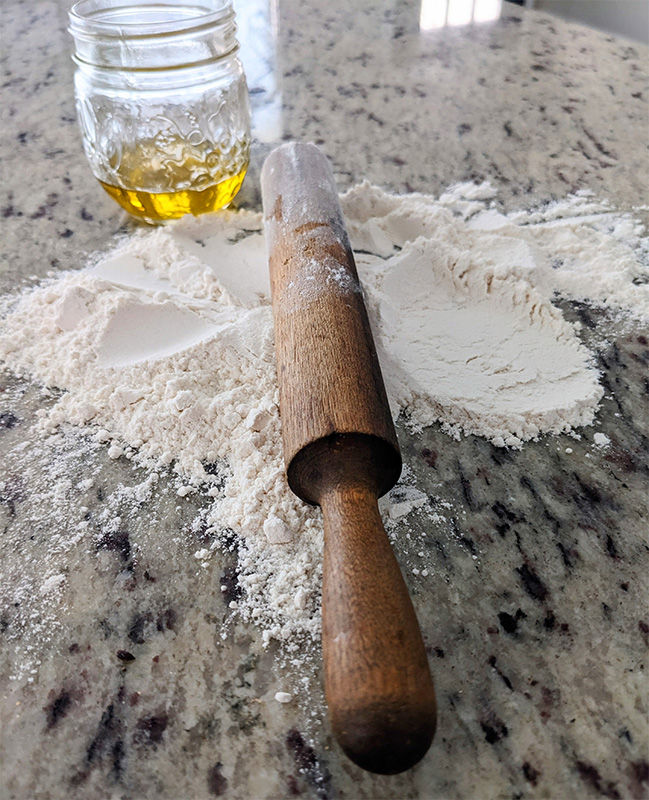
Elijah encounters the widow as he entered the Sidonian town and asks her for some bread. She explains that she is gathering sticks for a fire to cook a final meal for herself and her son with her last handful of flour and a bit of oil. Then, they would starve and die. However, Elijah relates a promise: God would make sure her supplies would not come to an end until the drought itself was over. And so, she believed what Elijah said, trusting the promise from God, and making a cake of bread from her supply, she fed the prophet first.
As she began to scoop, more flour came from the jar and oil continued to flow from her jug. Cakes of bread were baked for herself and her son. And so it went, her supplies did not run out—her oil jug did not empty, and her flour jar continued to offer flour until the day the drought ended. With strong faith she had believed the word of the Lord spoken to her through Elijah the prophet, and God’s mercy flowed like that oil jug, supporting the lives of Elijah, the widow and her son. His provision was evidence that He could be trusted to sustain life when death and famine surrounded her.
As widows, we have the promise of God in Psalm 68:5 that He is the father to the fatherless and the Defender (Champion) of widows. We are constantly under His almighty watch and care for provision, for mercy, for help. Jesus references this account of the widow of Zarephath in the book of Luke 4: 25-26, that although many widows of Israel were affected by the drought, God had sent Elijah to a Gentile widow to help her. His grace extends to those we might not expect! We cannot underestimate what God can do! We may be praying for families that seem impossible that they would turn to the Lord. But God. With Him, all things are possible! (Matthew 19:26).
As we turn over the last of our oil and flour, trust Him for what He has in store. He cares for each of us, so we can cast our every care on Him. (I Peter5:7)
A
Widow's Journal
A New Path, A New Purpose
by Kat Timonen
Widow of the Drought
Last updated